Imagine this: you’re a young Athenian citizen, maybe 18 or so. Your biggest worry isn’t what TikTok trend to follow or which streaming service has the best new series. Instead, it’s whether you’ll be chosen to serve on the Boule (that’s the city council, for you non-Athenians) or if your latest philosophical musings will earn you nods of approval – or derision – in the Agora. Welcome to ancient Athens, where life wasn’t just lived; it was deliberated, educated, and deeply divined. When we talk about the city-states of ancient Greece, it’s easy to get swept up in the dramatic battles and the legendary philosophers. But the core of Athenian success, the very engine that powered its golden age, was a deliberate and profound emphasis across several key pillars. So, while the question of whether Athens placed the greatest emphasis on government. education. religion. culture. might seem like a simple multiple-choice question, the reality is far more nuanced and, dare I say, delightfully complex. It wasn’t a case of picking just one winner; rather, it was the symbiotic relationship between these elements that truly defined Athenian greatness.
Governing the Agora: More Than Just Talking Heads
Let’s start with the big one: government. Athens is, of course, the birthplace of democracy, and what a revolutionary concept it was! While “democracy” today often means voting for representatives, Athenian democracy was far more direct. Citizens (and yes, we need to remember the caveats about who counted as a citizen – it wasn’t everyone!) actively participated in the Assembly, debating laws, ostracizing troublesome figures, and shaping policy.
The Power of the Citizen: Every freeborn Athenian male had a voice. Imagine the sheer energy in the Pnyx, the hill where the Assembly met, with thousands of citizens debating fiery speeches. It wasn’t always polite, mind you; I’ve often found that passionate debates can get a little… spirited, even today.
Checks and Balances (Ancient Style): The system had its own unique checks. The Boule prepared the agenda for the Assembly, and juries were composed of hundreds, sometimes thousands, of citizens to prevent corruption. It was a messy, vibrant, and ultimately effective system for its time.
Beyond The Politics: This emphasis on active civic participation meant that Athenians were constantly thinking about the collective good, about how to organize themselves, and about the responsibilities that came with freedom. This foundational aspect of governance profoundly influenced the other areas of Athenian life.
Cultivating Minds: Education as a Civic Duty
You can’t have a functioning democracy without informed citizens, right? This is where education comes in, and for Athenians, it wasn’t just about rote memorization. It was about developing critical thinking, rhetorical skills, and a well-rounded understanding of the world. The emphasis Athens placed on government. education. religion. culture. was deeply interconnected, with education serving as the bridge.
The Athenian Curriculum: Beyond the Basics
Think of Athenian education as a precursor to our liberal arts tradition, albeit with a distinct ancient flavor.
Literacy and Numeracy: Basic reading, writing, and arithmetic were essential. You couldn’t participate in civic life if you couldn’t read decrees or keep track of public funds.
The Arts of Persuasion: Rhetoric was paramount. Learning how to speak eloquently and persuasively was crucial for anyone hoping to influence public opinion or succeed in law. Imagine the pressure to deliver a killer speech!
Philosophy and the Pursuit of Wisdom: The Academy and the Lyceum weren’t just dusty academic institutions; they were vibrant centers of thought. Philosophers like Plato and Aristotle weren’t just contemplating abstract ideas; they were actively engaging with the practicalities of life, society, and governance. This intellectual curiosity was a hallmark of Athenian society.
The Divine Tapestry: Religion as the Fabric of Society
It’s easy to see religion as a separate entity, but in ancient Athens, it was woven into the very fabric of daily life and civic identity. The gods were not distant figures; they were active participants in human affairs, and honoring them was a vital part of being an Athenian. The profound emphasis Athens placed on government. education. religion. culture. meant that the divine permeated all aspects of existence.
Gods, Festivals, and Civic Pride
The religious landscape of Athens was rich and multifaceted.
Patron Deities: Athena, the goddess of wisdom and warfare, was the city’s patron. Her presence was felt everywhere, from the magnificent Parthenon to the everyday lives of citizens.
Public Festivals: Major festivals like the Panathenaia were not just religious observances; they were grand civic events that reinforced social bonds and celebrated Athenian identity. These gatherings were a crucial way to foster a sense of shared community.
Omens and Oracles: While rational inquiry was valued, the interpretation of omens and consulting oracles still played a role in decision-making, adding a layer of divine guidance to even the most mundane choices. It was a blend of the earthly and the ethereal.
The Symphony of Culture: Art, Drama, and Identity
Finally, we arrive at culture, the vibrant expression of Athenian spirit. This wasn’t just about pretty statues or entertaining plays; it was about reflecting on the human condition, celebrating achievements, and grappling with moral dilemmas. The intricate interplay where Athens placed the greatest emphasis on government. education. religion. culture. meant that culture served as both a mirror and a mould for society.
A Stage for Life’s Big Questions
Athenian culture was as dynamic as its political scene.
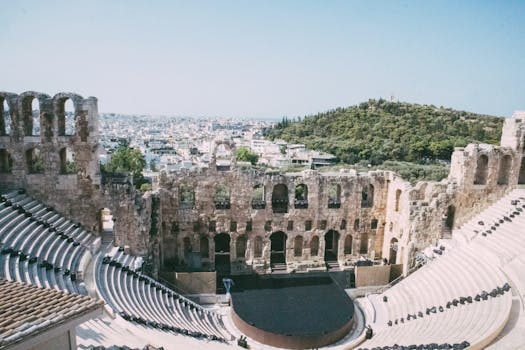
The Golden Age of Drama: Think of Sophocles, Euripides, and Aristophanes. Their tragedies explored themes of fate, justice, and human suffering, while their comedies offered sharp social commentary. The theatre was, in many ways, a public forum for exploring complex ethical and political issues.
Art as a Statement: The sculptures, pottery, and architecture of Athens weren’t just decorative; they were powerful statements of civic pride, religious devotion, and artistic innovation. The Acropolis stands as a testament to this.
Philosophy and the Arts: The intellectual currents fostered by education directly influenced artistic expression, creating a rich tapestry of thought and creativity.
Wrapping Up: The Athenian Blueprint for Enduring Influence
So, to definitively say that Athens placed the greatest emphasis on government. education. religion. culture. on one single aspect would be like trying to pick your favorite flavor of ice cream – they’re all crucial to the overall experience! The true genius of Athens lay not in prioritizing one over the others, but in their remarkable ability to weave them into a cohesive, dynamic whole. The robust government encouraged active participation, which demanded an educated citizenry, whose worldview was shaped by both philosophical inquiry and religious observance, all of which found its ultimate expression in a rich and reflective culture.
If there’s one takeaway from this ancient metropolis that resonates today, it’s this: a society thrives when its foundational elements – how it governs itself, how it educates its people, how it understands its place in the cosmos, and how it expresses its collective spirit – are not treated as separate silos, but as interconnected forces working in concert. So, the next time you’re pondering a complex societal issue, perhaps consider the Athenian model: a robust, engaged citizenry, a commitment to lifelong learning, a respect for the deeper currents of existence, and a vibrant cultural landscape. It’s a recipe for a civilization that not only endures but truly flourishes.